Desentoy focus on making custom designer toys.
- +86 137 1062 1226
- info@desentoy.com

Desentoy focus on making custom designer toys.
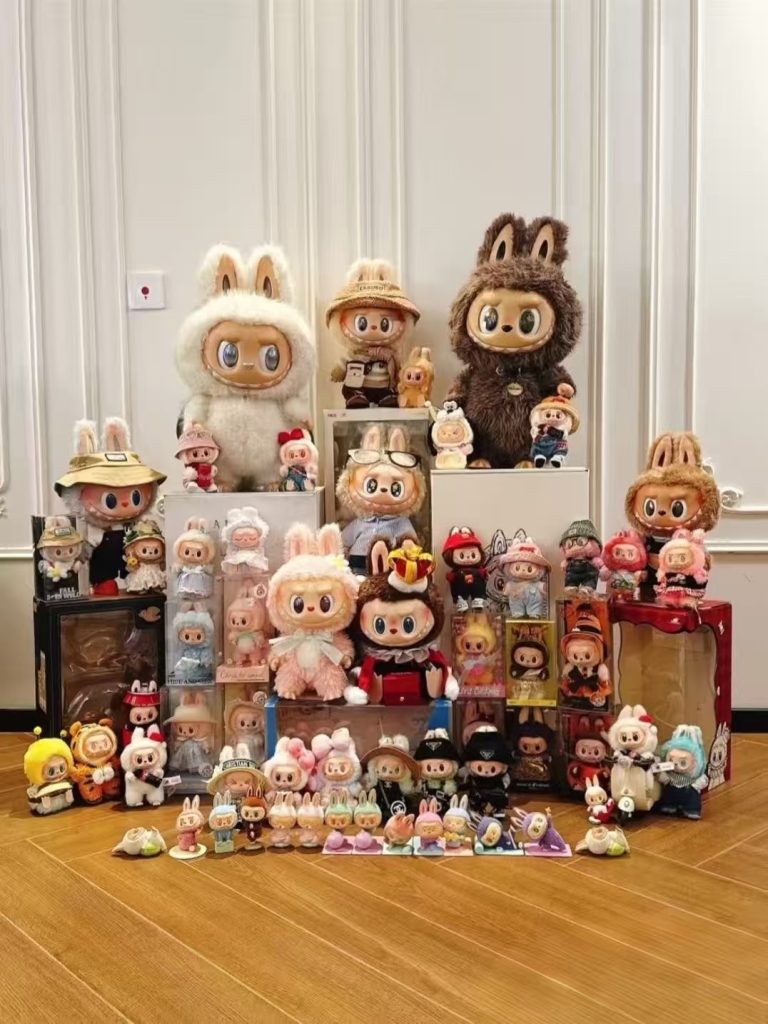
A Soft Vinyl Toy, commonly referred to as a Rotocast or Rotational Casting toy, is a type of collectible or designer figure known for its distinctive manufacturing process and unique tactile qualities.
Here are its key characteristics:
· Material & Feel: It is made primarily from soft, flexible Polyvinyl Chloride (PVC). This gives the toy a characteristic hollow, slightly yielding, and pleasant hand-feel, distinct from hard plastic or resin figures.
· Core Process – Rotational Casting: The defining production method is Rotational Casting (Rotocasting). Liquid PVC is injected into a sealed, hollow mold. The mold is then heated and rotated simultaneously in multiple axes. Through centrifugal force and gravity, the liquid PVC evenly coats the inner walls of the mold, creating a uniform, hollow shell as it cures. This allows for the creation of complex, seamless shapes.
· Key Features:
· Hollow & Lightweight: The interior is mostly empty, making the figures relatively light despite their often substantial size.
· Seamless Construction: The rotational process typically results in a one-piece main body without a visible parting line, offering a clean aesthetic.
· Articulation (Commonly): While some are static, many feature articulation points (like swivel joints at the head, arms, and legs) achieved by assembling multiple rotocast parts.
· Artistic Canvas: The smooth, matte vinyl surface is ideal for intricate, hand-painted details, making each piece a unique artistic expression. The process is prized for its handcrafted feel compared to mass-injection molding.
· Common Use: This technique is iconic in the world of designer toys, art toys, and collectibles. It is the preferred method for producing limited-edition or high-end figures from artists and brands (e.g., early Medicom Toy BE@RBRICKs, figures by artists like James Jarvis, or classic character toys).
In summary, a Soft Vinyl Toy is a hollow, collectible figure made by rotating liquid PVC inside a heated mold. It is valued for its soft texture, seamless form, and suitability for detailed hand-painting, making it a staple in art and designer toy culture.
Step 1: Mold Preparation & Material Injection
Evenly apply a mold release agent to the mold cavity. Inject a pre-measured amount of liquid PVC into the mold, precisely controlling the volume to ensure complete filling without overflow.
Step 2: Mold Closing & Sealing
Securely close and lock the mold to create a fully sealed environment. This prevents material leakage during the subsequent heating and rotation stages.
Step 3: Rotational Heating & Curing
Place the sealed mold into a heating oven. Initiate multi-axial rotation while heating to a set temperature (typically 160-200°C). This process lasts 3-5 minutes, allowing the PVC to evenly distribute and cure against the inner mold walls, forming a hollow shell.
Step 4: Cooling & Setting
Remove the mold from the oven and promptly submerge it in a cooling water tank for approximately 3-5 seconds (water quenching). Remove immediately afterwards to prevent over-cooling, which can complicate demolding.
Step 5: Demolding
Open the mold and introduce a small amount of compressed air into the cavities to aid part release. Carefully extract the formed soft vinyl components using specialized tools or clamps.
Step 6: Post-Processing & Inspection
Trim away sprues and parting line flash (excess material). Conduct a preliminary quality check on the blank (unpainted) rotocast parts to identify any major flaws before they proceed to painting and decoration.
Leverage our integrated toy manufacturing ecosystem in China for your limited-edition designer art toys. We specialize in small-batch production, accepting custom vinyl figure orders with a minimum order quantity (MOQ) of only 100 pieces—significantly lower than the industry typical MOQ of 500-1000 pieces.
Cost Structure
The total customization cost is calculated based on your project’s specific requirements and includes:
· Prototyping & Sampling
· Mold Making
· Mass Production
· Packaging
Key factors influencing the final price are: quantity, figure size, quality specifications, and design complexity. Higher order quantities benefit from a lower unit cost. Contact us with your design for a detailed, no-obligation quote.
Submit Your Design for Quote
Production Timeline
The standard lead time from design to delivery is 25 to 50 days, covering the complete process:
1. Prototype Development
2. Mold Fabrication
3. Mass Production (Rotocasting, Painting, Assembly)
4. Quality Control
5. Final Packaging
We would love to speak with you.
Feel free to reach out using the below details.